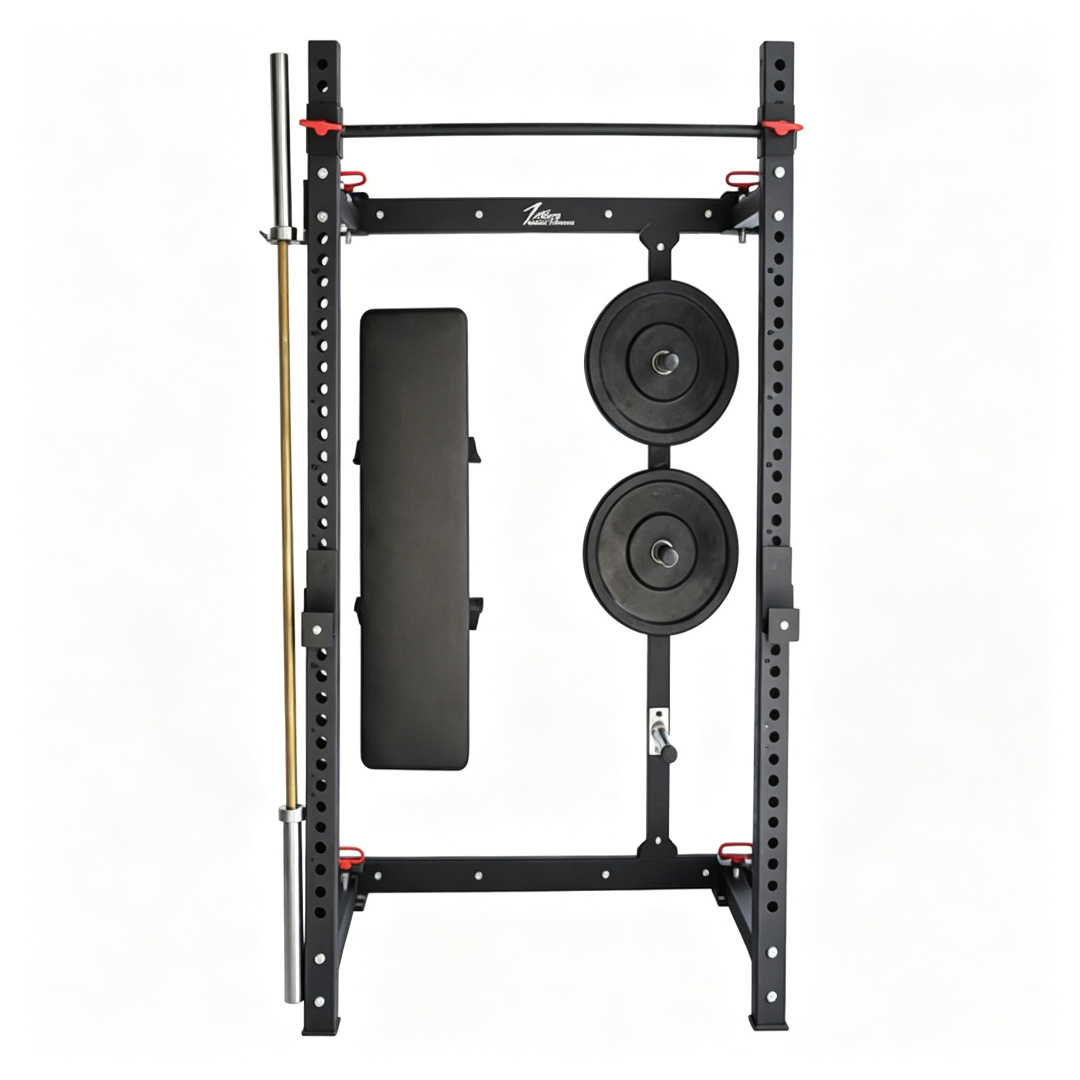
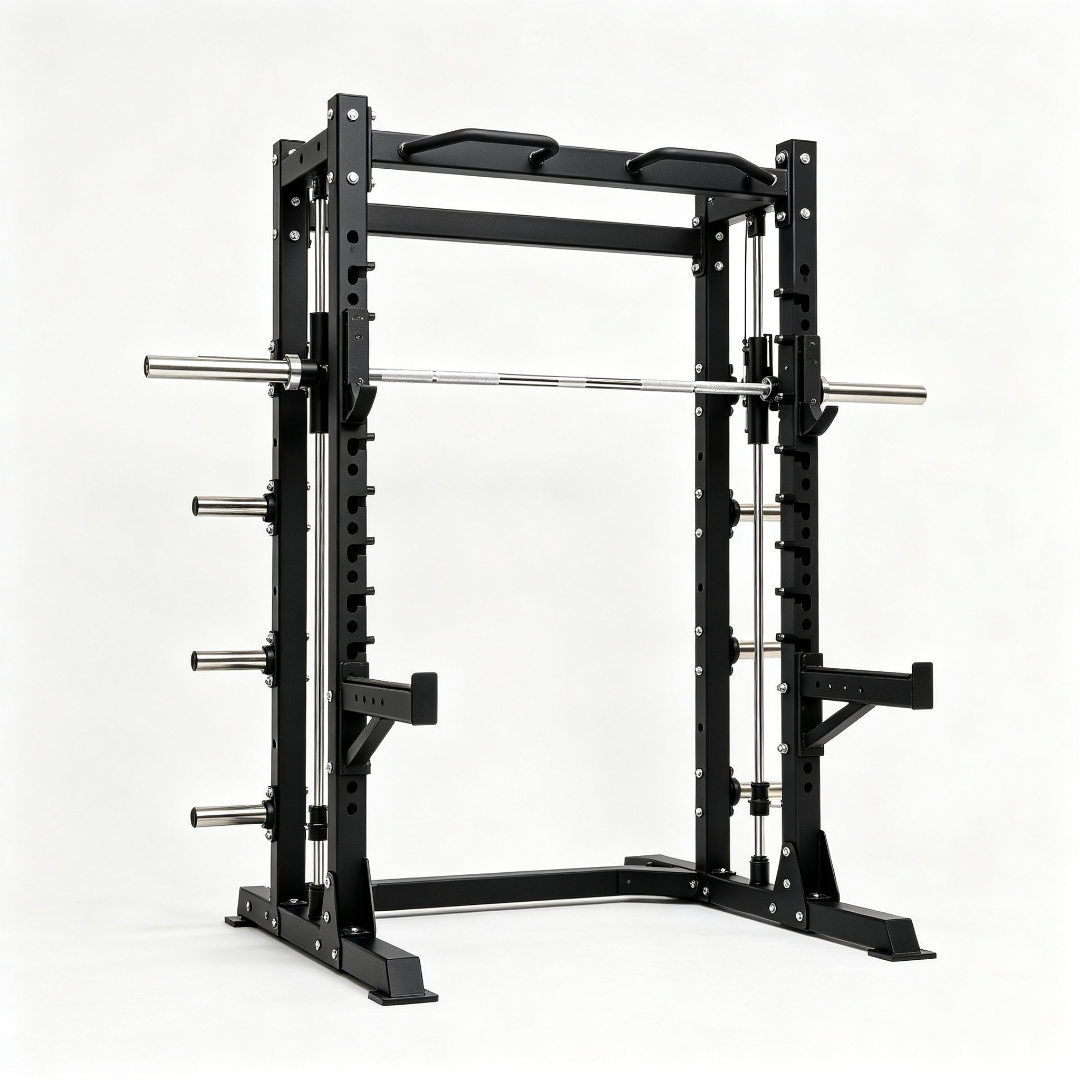
One of the most common questions we get from gym owners and facility managers is whether to invest in Smith machines or power racks. Both are staples of any serious strength training area, but they serve different purposes and suit different user demographics.
In this comparison, we'll examine the key differences across seven critical dimensions and help you decide which — or both — belongs in your facility.
Quick Comparison Table
| Feature | Smith Machine | Power Rack |
|---|---|---|
| Safety | Built-in safety catches | Adjustable safeties + spotter arms |
| Exercise Variety | ~15 exercises (fixed path) | Unlimited (free bar path) |
| User Skill Level | Beginner-friendly | Requires proper form |
| Footprint | ~40" x 60" | ~48" x 48" |
| Weight Capacity | 600-800 lbs | 1,000-1,500 lbs |
| Price (FOB) | $350-$600 | $400-$700 |
| Commercial Durability | Good | Excellent |
| OEM Customization | Available | Extensive (colors, logos, dims) |
1. Safety
Smith Machine: The barbell travels on a fixed vertical track with integrated safety catches that can be set at any height. This makes it very difficult for a user to get pinned under the bar — they can simply rotate the bar to lock it onto the racking hooks at any point.
Power Rack: Uses adjustable safety bars or straps that the user sets before lifting. While extremely safe when used correctly, they require the user to set them at the proper height. The open design also allows a spotter to assist more easily.
Winner: Power rack for experienced lifters; Smith machine for unsupervised beginners.
2. Exercise Variety
Smith Machine: The fixed bar path limits you to approximately 15-20 exercises. Common lifts include bench press, shoulder press, squats, lunges, and calf raises. The fixed path actually makes some exercises (like upright rows) less natural.
Power Rack: Because the barbell is completely free, you can perform hundreds of exercises. In addition to all the Smith machine exercises, you can do Olympic lifts, deadlifts, rack pulls, front squats, and any other barbell movement. Many racks also include pull-up bars and attachment points for cable systems.
Winner: Power rack — by a wide margin.
3. User Skill Level
Smith Machine: The fixed path provides stability that beginners find reassuring. Users don't need to balance the bar, which means they can focus on the movement pattern. However, this can also create a false sense of security — the fixed path doesn't translate perfectly to free-weight movements.
Power Rack: Requires proper lifting technique. Users must balance and stabilize the bar themselves. This is better for long-term strength development but can be intimidating for beginners. We always recommend that facilities with power racks provide proper instruction or have staff available.
Winner: Smith machine for beginners; power rack for serious trainers.
4. Space and Footprint
Smith Machine: Typically requires about 40" wide x 60" deep. The longer depth is needed because users step into the machine from the front. Some models include a built-in bench, which adds to the footprint.
Power Rack: Standard footprint is about 48" x 48". However, you need additional space on the sides for barbell overhang (an Olympic bar is 7 feet long) and walking space between racks.
Winner: Roughly equal — both need about 50-60 sq ft including clearance.
5. Durability and Maintenance
Smith Machine: Has more moving parts (linear bearings, guide rods, locking mechanism) that require regular maintenance. Bearings can wear out over time with heavy use, and guide rods need periodic cleaning and lubrication.
Power Rack: Essentially a static steel frame with very few moving parts (adjustable safeties, J-cups). This means minimal maintenance and extremely long lifespan — commercial power racks regularly last 10+ years with zero structural issues.
Winner: Power rack — significantly less maintenance and longer lifespan.
6. Who Should Buy Which?
Choose a Smith Machine If:
- Your gym has many beginners or casual users
- You have limited staff for spotting
- You're outfitting a hotel, apartment, or corporate fitness room
- Space is extremely limited
- Your user base skews older or less experienced
Choose a Power Rack If:
- Your gym caters to serious lifters and athletes
- You want maximum exercise versatility
- You have staff or trainers available for instruction
- You're outfitting a commercial gym, university, or training facility
- Durability and longevity are top priorities
Our Recommendation
For most commercial gyms, the ideal setup is both. A power rack for your serious strength training area and a Smith machine for general use and beginners. If budget only allows one, we typically recommend the power rack for commercial gyms — it offers far more versatility and is the preferred choice of serious lifters, who are often your most loyal members.
For hotels, apartments, and corporate fitness centers where users are less experienced and supervision is limited, the Smith machine is often the better choice.
Need Help Deciding?
Our equipment specialists can help you spec the right mix for your facility. Get a free consultation and custom layout plan.
Get Free Consultation